
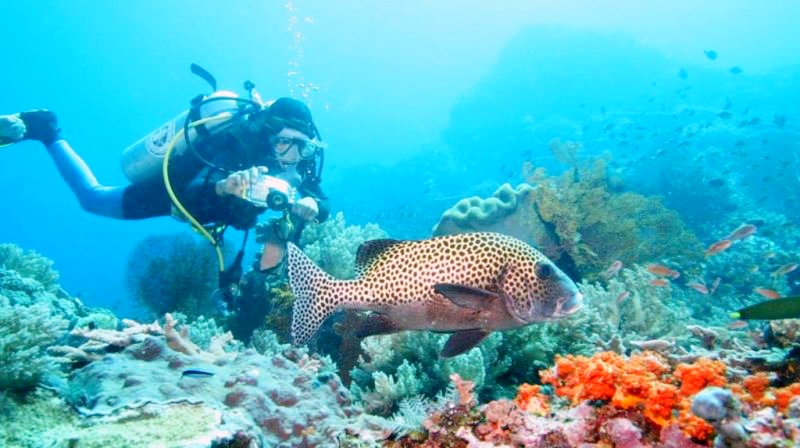
For adventurers and solitude seekers, Maratua Island is a glorious find, just far enough off Kalimantan’s less populated east coast to deter the onslaught of tourism that would surely fray its magnificent coral fringe.
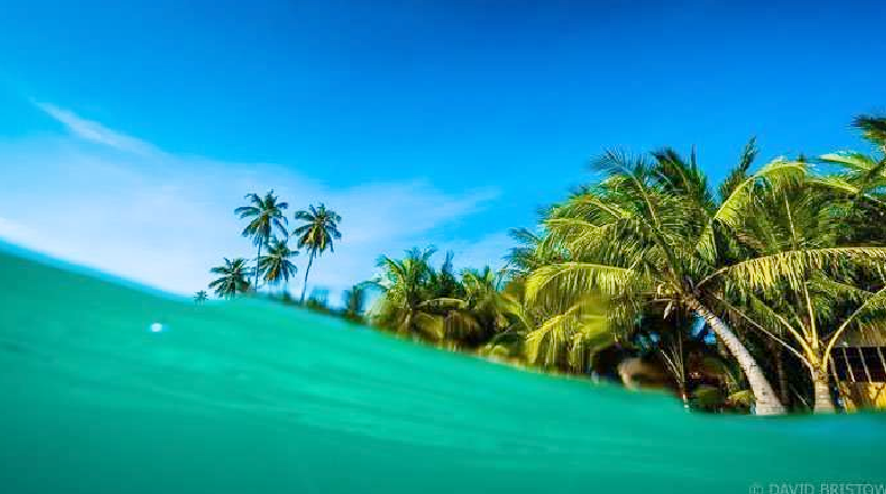
So far there are only a handful of low-key resorts – think stilted cabanas stretched scenically out over the sea – catering to intrepid travellers and divers inspired by Maratua’s unique anomalies: snorkelling in a lagoon full of stingless jellyfish on neighbouring Kakaban Island, pin diving into deep, limestone sea caves and drifting in the current with enormous manta rays as they feed.
What’s missing on Maratura is what makes it worth visiting: there’s no bustling backpacker scene, no beach bars and no bikini-clad beauties warming the sand, just authentic Indonesian villages, affordable beachfront accommodation, and just enough bitumen to ride a scooter and explore.
Blissfully for weary foreign travellers, there are no touts, making this destination about as far away from Bali as you could ever hope to get.
Maratua’s Turtle Traffic
Escaping into the sea one lazy afternoon, I wade through water as gin-clear and blue as a bottle of Bombay Sapphire. Soon, tiny, iridescent staghorn corals appear and I slide into the water and lift my fins, kicking gently towards the drop-off where the sand gives away to blooming coral gardens.
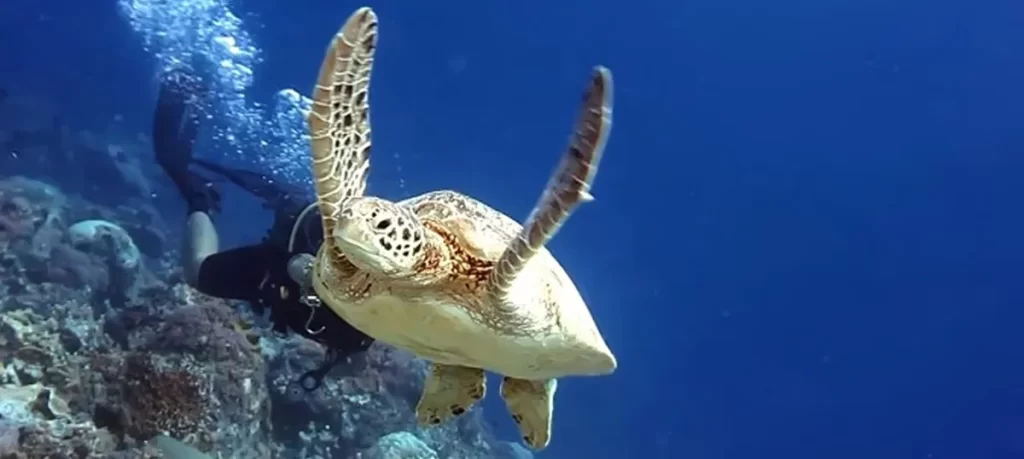
The edge of the atoll appears suddenly, plunging into a deep, dark abyss that disappears far, far below me. Out here I’m a tiny speck in the ocean, far from shore, hovering close to the edge of the reef and daring myself down to where sleepy green sea turtles rest in sandy pockets amongst the coral.
They eyeball me briefly and wish me away, and as the current pushes me on, these big, old turtles return to their slumber. Keeping pace are smaller, younger green and hawksbill turtles, skittish creatures that shoot past at a frantic speed and race away into the deep.
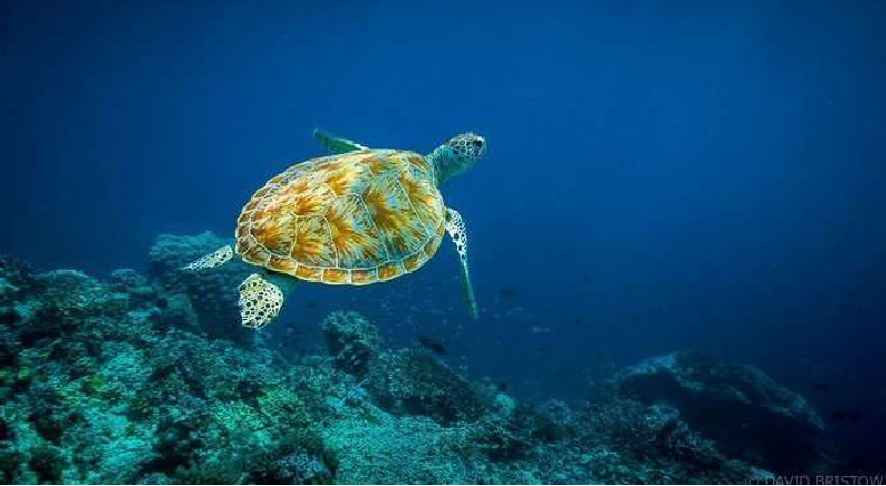
I drift south along the edge of the reef towards a favourite turtle feeding zone where currents converge in the channel between Maratua and neighbouring Kakaban Island.
I pull out before the current pushes me offshore and swim back through the shallows to tackle another lap. This circuit occupies me for days until the lure of spotting manta rays on distant Sangalaki Island broadens the horizon. We charter a speedboat, load up our gear and brave the swell to the southwest.
Sangalaki Manta Rays
Home to a small resort and one of Southeast Asia’s largest nesting populations of endangered green sea turtles, Sangalaki Island is a rare gem, located just south of, and within clear view of the far more touristy Derawan Island.
Beyond the forested tuft of greenery at its centre, bleached white sand beaches slide into the sea where bewitching coral gardens and seagrass beds harbour the turtles that lumber ashore under the cover of darkness from May until September.
What captivates most visitors to Sangalaki however are the sandy trenches to the island’s north where manta rays congregate year-round to feed in plankton-rich currents. Their overwhelming size is tempered by a gentle demeanour and watching them hover above a cleaning station as wrasse get to work, or swimming open-mouthed as the current sends a feed of plankton their way, provides one of the most thrilling experiences you can have in the sea.

 Gliding with remarkable grace they ‘fly’ across the sea bed with each languid flap of their two metre-wide wings, dwarfing snorkellers as they soar overhead and swoop suddenly into close view. When a manta ray catches your eye, it leaves you forever spellbound. Only when you eventually tire of finning in the swift-flowing currents do you even contemplate getting back in the boat, and if it’s manta rays you want to see, a daytrip from Maratua to Sangalaki is your best bet.
Riding Inland
From the sky, Maratua is a heavenly sight: girthed by rich coral reefs and opalescent seas that intensify from powder blue to turquoise to aqua the further you venture towards the island’s sudden drop into the abyss. But on land, this bedrock of limestone heaped with white sand beaches harbours a lush, forested interior that few paths penetrate.
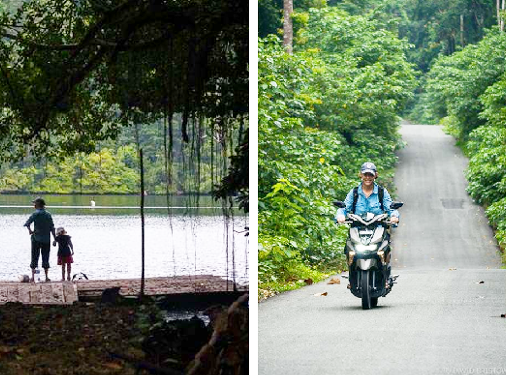
For determined adventurers keen to escape the pack in Indonesia, remote Maratua Island is proof that the path less travelled still exists. The possibilities for adventure on this authentic Indonesian atoll are not limited to diving, although many will come purely to do just that.
Maratua’s snorkelling is first rate and encounters with the region’s most appealing marine creatures – manta rays, sharks, turtles and stingless jellyfish – take place in the shallows.
For all that it offers Maratua should be a far more bustling destination and the airport that opened to charter flights in 2017 will accelerate progress. For now though, this faraway isle is a blissful find.